Top 10 Essential Tips for Successful Garage Door Installation
When it comes to home improvement projects, garage door installation is often overlooked, yet it plays a crucial role in the functionality and security of a home. According to a recent industry report by the Home Improvement Research Institute, nearly 50% of homeowners consider garage doors a significant aspect of their property's curb appeal and security. With the average garage door lifespan spanning between 15 to 30 years, proper installation is essential to ensure longevity and optimal performance.
Furthermore, the National Association of Home Builders reveals that incorrectly installed garage doors can increase the risk of malfunctions and safety hazards, ultimately leading to costly repairs. Given that garage doors account for approximately 30% of a home's exterior, their installation should never be taken lightly. This introduction seeks to provide key insights and expert tips to help homeowners navigate the complexities of garage door installation, ensuring that they achieve a seamless and safe setup. By following these essential guidelines, homeowners can not only enhance their property's aesthetic appeal but also boast improved functionality and security in their everyday lives.

Understanding Garage Door Types and Their Features
When contemplating garage door installation, understanding the various types of garage doors and their features is crucial to making an informed decision. The two most common types are sectional and roller garage doors.
Sectional doors, which are made of several horizontal panels, offer excellent insulation and space-saving benefits, as they lift vertically and tuck away neatly under the ceiling. According to the International Door Association (IDA), nearly 80% of homeowners opt for sectional garage doors due to their versatility and design options.
Roller doors, on the other hand, consist of slats that roll up into a compact coil above the door opening. They are particularly beneficial in situations where headspace is limited. The IDA reports that these doors can be a great choice for both residential and commercial properties, offering high durability and security. Additionally, both types are now often available with smart technology features, allowing homeowners to monitor and control their garage doors remotely. As the industry continues to evolve, understanding the different features and their advantages can lead to greater satisfaction and functionality from your garage door system.
Preparing Your Garage for Installation: Essential Measurements and Tools
Preparing your garage for a successful door installation is crucial to ensure the process goes smoothly. Start by taking essential measurements of your garage opening, including height, width, and the headroom above. This will help you select the appropriate garage door size and style. Make sure to check for any obstructions that could interfere with the installation, such as lighting fixtures, shelves, or other items that may be stored in the garage. A clear space will significantly reduce the chances of complications during the installation.
Additionally, having the right tools at hand is imperative. Basic tools such as a drill, tape measure, level, and wrenches are essential for the task. If you're handling the installation yourself, familiarize yourself with the tools you will be using. A well-organized workspace will help you work efficiently and reduce the likelihood of errors. Remember that safety should always come first; wear protective gear like gloves and goggles while you work.
As you embark on your garage door installation, keep in mind some helpful tips. First, double-check all measurements before making any cuts. Mistakes in sizing can lead to costly delays. Secondly, consider enlisting the help of a friend or family member to assist you; extra hands can make the process less daunting and enhance safety. Taking the time to prepare adequately will lead to a more successful and efficient installation experience.
Top 10 Essential Tips for Successful Garage Door Installation
The following chart illustrates the importance of different preparation tips for garage door installation, based on a survey of homeowners. Each tip is ranked by the percentage of respondents who found it essential for a successful installation.
Step-by-Step Guide to Removing an Old Garage Door
Removing an old garage door is a critical first step for a successful installation of a new one. According to a report by the Garage Door Manufacturers Association (GDMA), nearly 60% of homeowners choose to replace their garage doors to enhance their property value and curb appeal. The process begins by disconnecting the door from the opener, ensuring safety as you avoid unnecessary strain or injury. It’s advisable to have a helper during this phase to manage the door’s weight and stability, as standard garage doors can weigh from 130 to 400 pounds depending on the material used.
Once disconnected, focus on taking out the door panels carefully. Start by removing the screws or bolts securing the door to the tracks and lifting the panels one by one. It’s essential to keep safety gear, such as gloves and eye protection, at hand since accidental slips can occur during disassembly. According to industry standards, nearly 25% of garage door accidents result from improper handling during removal. After all panels are detached, you can safely dismantle the tracks and hardware, making space for the new installation. Proper disposal of the old door is also crucial, with recycling options available to minimize waste, supporting green initiatives in home renovations.
Key Installation Techniques for Secure and Proper Functioning
When it comes to garage door installation, employing key techniques is essential for ensuring secure and proper functioning. According to a report by the International Door Association, improper installation is a leading cause of garage door failure, contributing to nearly 30% of all service calls. One of the most critical techniques involves precise alignment of the door hardware, including the tracks and rollers. Misalignment can lead to premature wear and tear, resulting in increased maintenance costs and decreased lifespan of the door. Utilizing a level and measuring tape during installation ensures that all components are correctly positioned, minimizing future issues.
Another vital aspect of garage door installation is the proper calibration of the door opener. The Door and Access Systems Manufacturers Association states that nearly 60% of all garage door opener issues stem from incorrect programming and settings. It is crucial to follow the manufacturer's guidelines to adjust the force and limit settings accurately. Additionally, testing the door’s auto-reverse feature is a non-negotiable step in the process. A properly functioning auto-reverse mechanism can prevent accidents and injuries, offering peace of mind for users. By focusing on these key installation techniques, homeowners can ensure a reliable and safe garage door system that stands the test of time.
Top 10 Essential Tips for Successful Garage Door Installation
| Tip Number |
Installation Tip |
Details |
| 1 |
Read the Manual |
Always read the manufacturer's manual for setup instructions. |
| 2 |
Gather Necessary Tools |
Have all required tools ready before starting the installation. |
| 3 |
Ensure Proper Measurements |
Measure your garage door size accurately to avoid issues. |
| 4 |
Check the Track Alignment |
Ensure the tracks are level and properly aligned before installation. |
| 5 |
Install the Hardware Securely |
Make sure to secure all hardware tightly for safety. |
| 6 |
Use Proper Safety Gear |
Wear safety glasses and gloves during installation to protect yourself. |
| 7 |
Incorporate a Helper |
Have a friend or family member assist you for better efficiency. |
| 8 |
Test the Door’s Balance |
Ensure the door is balanced by manually lifting it halfway. |
| 9 |
Install Safety Features |
Implement safety sensors and automatic reverse systems. |
| 10 |
Regular Maintenance |
Schedule periodic maintenance to ensure long-lasting performance. |
Common Mistakes to Avoid During Garage Door Installation
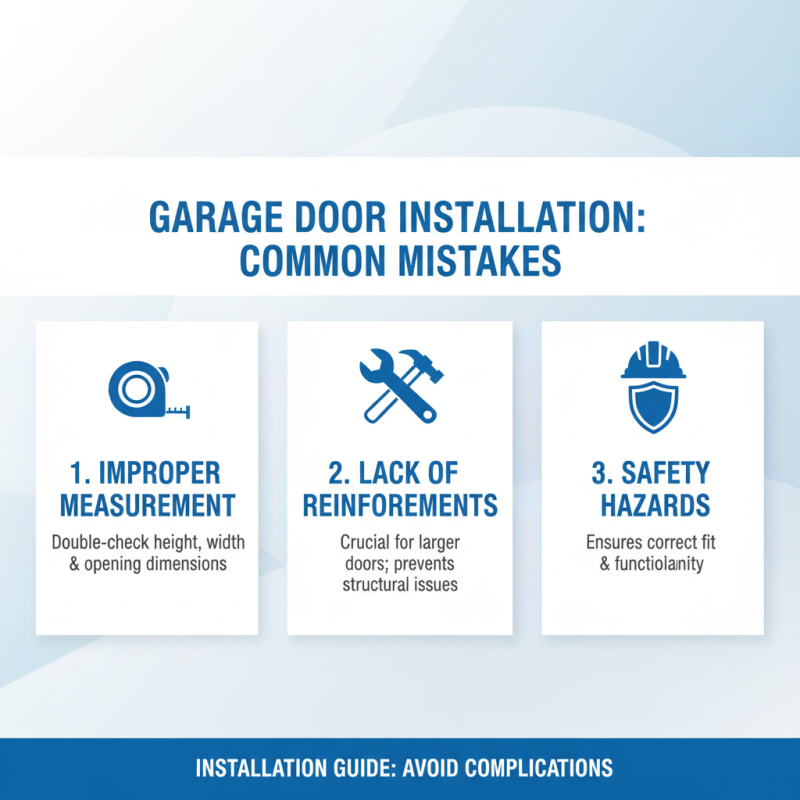
When installing a garage door, many common mistakes can lead to complications and safety hazards. One prevalent error is improper measurement. Ensuring that the garage door is accurately measured is crucial; even slight miscalculations can result in a door that does not fit correctly. It is advisable to double-check all measurements, including the height, width, and the opening's overall dimensions, before proceeding with installation. Additionally, overlooking the need for reinforcements, particularly in larger doors, can lead to structural issues and may compromise the door's functionality.
Another significant mistake occurs when installing the hardware, such as tracks and springs. Failing to level the tracks correctly can cause the door to malfunction, leading to uneven wear or potential accidents. Furthermore, not following the manufacturer's instructions regarding the spring system can be dangerous, as the tension in garage door springs can pose serious risks if not handled properly. Taking the time to understand the entire installation process and adhering to safety precautions will ultimately lead to a more successful and secure garage door setup.